Home / Services

Services

1 Dairy Development

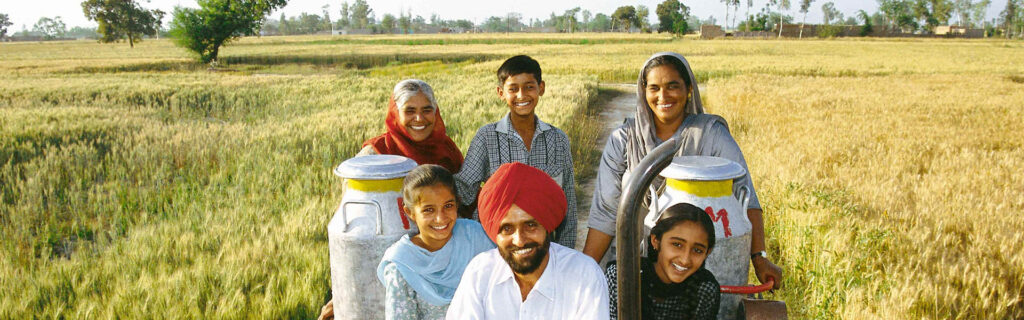
    Dairying a source of sustainable livelihood and poverty alleviation. The project has provided an efficient institutional platform at village level to produce low-cost milk and sale of dairy farmers’ milk at optimum value and made available various productivity enhancement services to enhance milk productivity of dairy animals in these regions. In this regard – CoOperative Society makes lot of changes among farmers to make dairying a profitable profession to farmers. FSDD will be doing –


  • Assisting and Helping co-farmers in setting-up dairy farms for milk production
  • Promoting “Balanced Diet” program to improve milk production and decrease cost
  • Setting-up genetic improvement centres and breeding centres
  • Assisting co-farmers in animal/ genetic trading
  • Breed Development trainings – Artificial Insemination and Sexed Semen
  • Fodder Production and Storage – “Fodder Bank” establishment
  • Knowledge sharing and trainings of Quality Milk Production to farmers

2 Mission

Missiontext
Objectives

Seed Production

Fodder and Other Crops

  1. Producing high quality fodder and other crop seeds and supplying to farmers at affordable price.
  2. Mitigating deficit of quality fodder and other crops seeds.
  3. Doubling the farmer’s income through seed production and fodder production
  4. Earning extra income from the seed production and improving livelihood
  5. Obtaining technical support from Govt. agencies on new seed production technics to produce international quality seed
  6. Gaining knowledge to produce certified seed and supplying to domestic and international farmers
  7. Connecting research institutes to take license of latest seed technologies, hybrids and varieties and market in the domestic and global markets.
  8. Exploring the business opportunity for quality seed as below –
    o Fodder Seeds – 120000 MT seed
    o Corn – 100000 MT seed / Rice – 75000 MT Seed
    o Pulses – 200000 MT/ Oil Seeds – 50000 MT
    o Vegetables – 10000 MT/ Flowers and Ornamentals– 500 MT
    o Medicinal Herbs & Lawn Grass – Infant Stage
  9. Utilising the new technologies in improving the seed quality and seed health in seed production where co-farmers can get benefit.
  10. Increasing the farm output by proving good quality seed to the co-farmers.
  11. Increasing the milk production by providing quality fodder seed and fodder production technologies to co-farmers
 

Objectives

Fodder Production

The chronic problem is green fodder deficit in India can be addressed through the adoption of improved fodder production and conservation technologies which will increase the production and availability of green fodder in terms of both quality and quantity. SANSCARMSCSLTD can be nodal agency to mitigate the fodder deficit in many states by adopting simples’ techniques –
  1. Initiatives in the area of Fodder seed production enhancement’
  2. Development and popularization of “Green Fodder Production Technologies”
  3. Introduction of suitable techniques for fodder conservation and development of innovative models
Demonstrates cultivation of improved varieties of fodder crops viz. cereals –
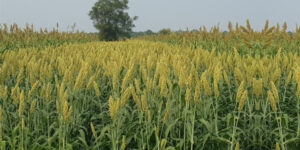
  1. Maize, Sorghum, Pearl millet, Oats, Rye Grass
  2. Legumes – lucerne, berseem, cowpea, guar,
  3. Perennial grasses – Bajra napier hybrid, guinea grass, setaria,
  4. Perennial Pasture legume – Hedge lucerne, clitoria, stylo)
Regular training programmes on fodder production and conservation technologies are being conducted for exposure of fodder officers and field staff from different milk unions for fodder development purpose. Commercialization of Ready to Feed Fodders –
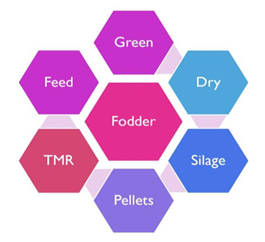
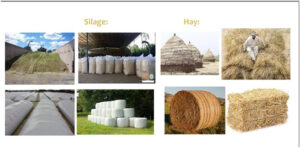
  1. Silage/ Dry Hay Pellets/ Green Fodder/ TMR/ FEED
  2. Ready to Feed fodders market is estimated to Rs. 30000 Cr. In India by 2030. As a Co-Op, have huge responsible and opportunity in make a business case in this segment.

Objectives

Dairy Development

Dairying a source of sustainable livelihood and poverty alleviation. The project has provided an efficient institutional platform at village level to produce low-cost milk and sale of dairy farmers’ milk at optimum value and made available various productivity enhancement services to enhance milk productivity of dairy animals in these regions. In this regard Co-operative Society makes lot of changes among farmers to make dairying a profitable profession to farmers. SANSCAR will be doing –
  1. Assisting and Helping co-farmers in setting-up dairy farms for milk production.
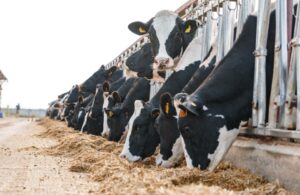
  2. Promoting “Balanced Diet” program to improve milk production and decrease cost.
  3. Setting-up genetic improvement centers and breeding centers.
  4. Assisting co-farmers in animal/ genetic trading.
  5. Breed Development trainings – Artificial Insemination and Sexed Semen.
  6. Fodder Production and Storage – “Fodder Bank” establishment.
  7. Knowledge sharing and trainings of Quality Milk Production to farmers.

Objectives

Mechanization

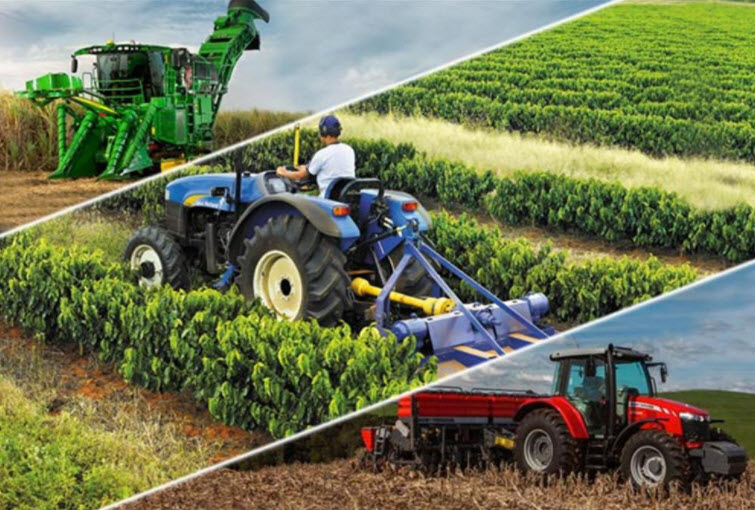
Mechanization is a crucial input for agricultural crop production and one that historically has been neglected in the context of developing countries. Factors that reduce the availability of farm power compromise the ability to cultivate sufficient land and have long been recognized as a source of poverty, especially in India. Increasing the power supply to agriculture means that more tasks can be completed at the right time and greater areas can be farmed to produce greater quantities of crops while conserving natural resources. Applying new technologies that are environmentally friendly enables farmers to produce crops more efficiently by using less power. Sustainable agricultural mechanization can also contribute significantly to the development of value chains and food systems as it has the potential to render postharvest, processing and marketing activities and functions more efficient, effective and environmentally friendly. Initiatives –


  1. Custom Hiring Centers by Society
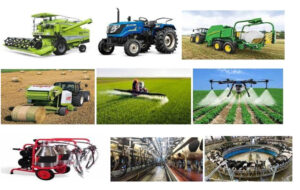
  2. Tractors/ Implements/ Threshers/ Harvesters/ Sprayers/ Drones.
  3. Sales and Service centers within farmer’s reach points
  4. Dairy Mechanization .
  5. Fodder Chaff Cutters/ Balers/ Silage/ Milking Machines.

Objectives

Post Harvesting Technologies

Post-harvest technology is the application of scientific and engineering principles to the handling, storage, packaging, distribution, and sale of agricultural produce after it has been harvested. Post-harvest technology is used to improve the quality and extend the shelf life of food. It also helps to reduce wastage and improve food safety. Eighteen per cent of India’s fruit and vegetable production – valued at Rs 13,300 cores –is wasted annually, according to data from the Central Institute of Post-Harvest Engineering and Technology (CIPHET). According to the UNEP report for 2021 called UN Food Waste Index Report 2021, India wastes as much as 50 kilos of food per person per year. That amounts to a staggering 68,760,163 metric tones of household food waste per year. SANSCAR will focus on –
  1. Milk Processing units at district level to increase the farmer income
  2. Fruits and Vegetable processing/ Packaging Units will be established.
  3. Cold chain will be developed for all perishable

Objectives

Mechanisation

Mechanization is a crucial input for agricultural crop production and one that historically
has been neglected in the context of developing countries. Factors that reduce the availability of farm power compromise the ability to cultivate sufficient land and have long been recognized as a source of poverty, especially in India. Increasing the power supply to
agriculture means that more tasks can be completed at the right time and greater areas can be farmed to produce greater quantities of crops while conserving natural resources.

Applying new technologies that are environmentally friendly enables farmers to produce crops more efficiently by using less power. Sustainable agricultural mechanization can also
contribute significantly to the development of value chains and food systems as it has the potential to render postharvest, processing and marketing activities and functions more
efficient, effective and environmentally friendly.
Initiatives –

  1. Custom Hiring Centres by Society –
    o Tractors/ Implements/ Threshers/ Harvesters/ Sprayers/ Drones
  2. Sales and Service centres within farmer’s reach points.
  3. Dairy Mechanisation –
    o Fodder Chaff Cutters/ Balers/ Silage/ Milking Machines

Objectives

Fodder Production

Fodder and Other Crops

  1. Producing high quality fodder and other crop seeds and supplying to farmers at affordable price.
  2. Mitigating deficit of quality fodder and other crops seeds.
  3. Doubling the farmer’s income through seed production and fodder production
  4. Earning extra income from the seed production and improving livelihood
  5. Obtaining technical support from Govt. agencies on new seed production technics to produce international quality seed
  6. Gaining knowledge to produce certified seed and supplying to domestic and international farmers
  7. Connecting research institutes to take license of latest seed technologies, hybrids and varieties and market in the domestic and global markets.
  8. Exploring the business opportunity for quality seed as below –
    o Fodder Seeds – 120000 MT seed
    o Corn – 100000 MT seed / Rice – 75000 MT Seed
    o Pulses – 200000 MT/ Oil Seeds – 50000 MT
    o Vegetables – 10000 MT/ Flowers and Ornamentals– 500 MT
    o Medicinal Herbs & Lawn Grass – Infant Stage
  9. Utilising the new technologies in improving the seed quality and seed health in seed production where co-farmers can get benefit.
  10. Increasing the farm output by proving good quality seed to the co-farmers.
  11. Increasing the milk production by providing quality fodder seed and fodder production technologies to co-farmers
WHO WE ARE

Key Observations of the Society

Achievements
To promote overall economic development of members through self-help and mutual aid, principles of voluntary formation, autonomous functioning, democratic member control, and professional management, members economic participation of society.
Values

To promote overall economic development of members through self-help and mutual aid, principles of voluntary formation, autonomous functioning, democratic member control, and professional management, members economic participation of society.

QUALITY POLICY

To promote overall economic development of members through self-help and mutual aid, principles of voluntary formation, autonomous functioning, democratic member control, and professional management, members economic participation of society.

FEILD OF ACTIVITIES
To promote overall economic development of members through self-help and mutual aid, principles of voluntary formation, autonomous functioning, democratic member control, and professional management, members economic participation of society.
Project
Consulting
App
Development

OUR TEAM

Meet our staff.

For fast and reliable work with high degree of customer’s satisfaction “Analyst Consultants” brings under its umbrella a team of young and experienced dynamic professionals carefully chosen from top colleges/universities, MNC’s and major Industrial houses.

• Seed Processing and Supply Chain Management Team Executives – 125 Years o Bulking the Raw Seeds o Conditioning the seed for quality standards o Moisture/ Germination/ Genetic Purity/ Physical Purity/ Vigor o New generation processing Plants – Fowler Westrup/ National and MNC o 10K Tonns Capacity Cold chain linkages o Distributed 50K Tonns of Seed to farmers in last 10 Years with “ZERO” remarks o Excellent quality and best packing material o Best farmer useful agronomy guide on/In the packet/ Bags o Timely supplies to meet the farmer requirements

• Seed Processing and Supply Chain Management Team Executives – 125 Years o Bulking the Raw Seeds o Conditioning the seed for quality standards o Moisture/ Germination/ Genetic Purity/ Physical Purity/ Vigor o New generation processing Plants – Fowler Westrup/ National and MNC o 10K Tonns Capacity Cold chain linkages o Distributed 50K Tonns of Seed to farmers in last 10 Years with “ZERO” remarks o Excellent quality and best packing material o Best farmer useful agronomy guide on/In the packet/ Bags o Timely supplies to meet the farmer requirements

• Seed Processing and Supply Chain Management Team Executives – 125 Years o Bulking the Raw Seeds o Conditioning the seed for quality standards o Moisture/ Germination/ Genetic Purity/ Physical Purity/ Vigor o New generation processing Plants – Fowler Westrup/ National and MNC o 10K Tonns Capacity Cold chain linkages o Distributed 50K Tonns of Seed to farmers in last 10 Years with “ZERO” remarks o Excellent quality and best packing material o Best farmer useful agronomy guide on/In the packet/ Bags o Timely supplies to meet the farmer requirements

• Seed Processing and Supply Chain Management Team Executives – 125 Years o Bulking the Raw Seeds o Conditioning the seed for quality standards o Moisture/ Germination/ Genetic Purity/ Physical Purity/ Vigor o New generation processing Plants – Fowler Westrup/ National and MNC o 10K Tonns Capacity Cold chain linkages o Distributed 50K Tonns of Seed to farmers in last 10 Years with “ZERO” remarks o Excellent quality and best packing material o Best farmer useful agronomy guide on/In the packet/ Bags o Timely supplies to meet the farmer requirements

UI / UX Design
Apps Development
AJAY KUMAR
Alex Regelman
Senior Design Engineer
Cad Operators
Stacey Stamper
Stephanie Lawrence

Best experience

Our Motive

The principal place of business & registered address of Sanscar Multi-State Co-Operative Society Ltd. (SANSCAR) shall be at V.V Square, Property T.S No.710/1B1 & 2B1 CMC Ward No.20, Gandhi Nagar, Moka Road, Ballari, Karnataka 583 103 and the Branch/Regional Office shall be at Plot.no.201, Elite Avenue, Kondapaneni Towers, Mangalagiri, Guntur district, Andhra Pradesh – 522503. If any change in this address shall be intimated to the Central Registrar and all concerned within 15 days of its change and also published in local newspaper and shall be made by an amendment of its bye-laws after following the procedures laid down in Sec. 11 and Rule 8 (2) of the Multi State Co-operative Societies Act, 2002.

We are Here

To Discuss

Your's Next Project